
Blog
What Are Facing Bricks?
A Complete Guide to Types, Benefits, Applications and Choosing the Right Facing Brick for Modern Architecture
For centuries, facing bricks have played a defining role in architecture, shaping some of the world’s most iconic buildings, cityscapes, and public spaces. From timeless European townhouses and historic landmarks to contemporary residential developments and commercial projects, brick continues to be one of the most trusted and enduring construction materials available today.
Modern architecture demands far more than structural performance. Architects, developers, contractors and property owners seek building materials that combine durability, aesthetic appeal, sustainability and long-term value. This is precisely why facing bricks remain one of the preferred choices for brick facades, exterior brick cladding, and architectural design across Europe and many international markets.
Unlike standard building bricks, a facing brick is manufactured to deliver both structural integrity and an exceptional finished appearance. Colour consistency, dimensional accuracy, surface texture, weather resistance and long-term durability all contribute to creating buildings that maintain their visual appeal for decades with minimal maintenance.
Advances in brick manufacturing technology have significantly expanded the range of products available today. Modern construction projects can benefit from clay facing bricks, clinker facing bricks, glazed bricks, engineering bricks, handmade bricks and architectural brick solutions designed to meet the specific requirements of residential, commercial, industrial and public developments.
At SAROVEX, we believe that selecting the right brick is about much more than choosing a building material. It is about creating architecture that stands the test of time. Every façade represents the identity of a building, every brick contributes to its performance, and every carefully selected material adds lasting value throughout the building’s lifecycle.
Whether you are designing a luxury residence, a commercial complex, a hospitality project or a large-scale urban development, understanding the different types of facing bricks is the first step toward achieving both architectural excellence and long-term performance.
What Are Facing Bricks?
A facing brick is a high-quality architectural brick specifically manufactured for visible applications where both appearance and technical performance are equally important. Unlike common building bricks that are primarily used within structural walls and concealed construction, facing bricks are designed to remain exposed, forming the finished surface of both exterior and interior walls.
Because they are permanently visible, facing bricks must meet considerably higher standards in terms of appearance, durability and manufacturing precision. Consistent colour, accurate dimensions, high compressive strength and resistance to weathering are all essential characteristics that distinguish premium facing bricks from standard masonry units.
Today, facing bricks are widely used in:
- Residential developments
- Commercial buildings
- Office complexes
- Hotels and hospitality projects
- Educational facilities
- Healthcare buildings
- Public infrastructure
- Cultural and heritage projects
- Luxury architectural developments
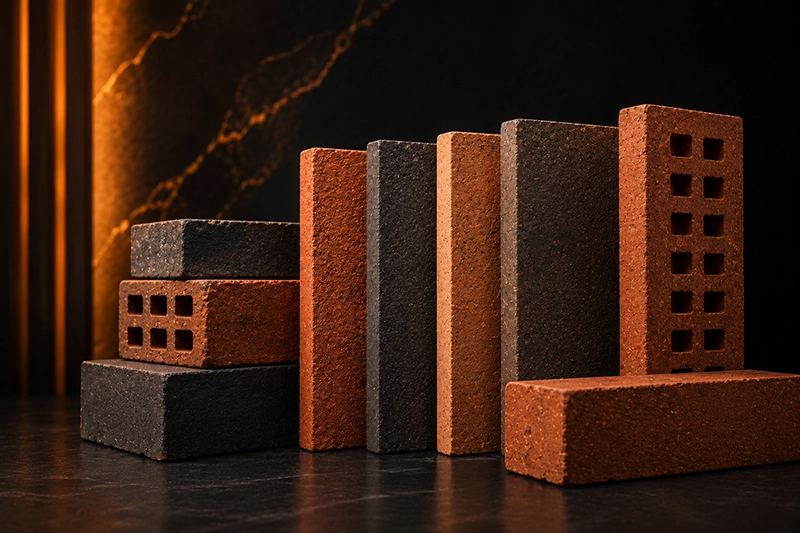
Modern facing bricks are available in an extensive variety of colours, textures, finishes and sizes, allowing architects to create distinctive building envelopes while maintaining exceptional structural performance.
Depending on project requirements, designers may choose from several categories of facing bricks, including:
- Clay Facing Bricks
- Clinker Facing Bricks
- Glazed Facing Bricks
- Engineering Bricks
- Handmade Bricks
- Special Shaped Bricks
- Architectural Bricks
Each type offers unique characteristics suited to different climates, architectural styles and performance requirements.
Selecting the appropriate facing brick not only enhances the visual identity of a building but also contributes to lower maintenance costs, improved durability and greater long-term investment value.
The History of Facing Bricks
Brick has accompanied human civilisation for thousands of years. Archaeological evidence suggests that some of the earliest fired clay bricks were produced in Mesopotamia and Persia, where they became essential components of cities, palaces, temples and monumental architecture.
Throughout history, brick evolved from a purely structural material into an architectural element capable of expressing craftsmanship, culture and identity. Ancient Persian architecture demonstrated remarkable mastery in decorative brickwork, while later European architecture transformed brick façades into defining characteristics of entire cities.
Countries such as the Netherlands, Belgium, Germany, Denmark and the United Kingdom have developed internationally recognised traditions of brick architecture. Many buildings constructed more than a century ago continue to perform exceptionally well, illustrating the remarkable durability of quality facing bricks.
The Industrial Revolution introduced significant improvements in manufacturing consistency and kiln technology, leading to stronger, more precise and longer-lasting products. This evolution eventually resulted in the development of clinker facing bricks, manufactured at extremely high firing temperatures to produce exceptionally dense bricks with outstanding resistance to moisture, frost and abrasion.
Today, facing bricks continue to evolve through modern manufacturing technologies that offer improved dimensional precision, enhanced sustainability and greater architectural flexibility while preserving the timeless character that has made brick one of the world’s most respected building materials.
Why Facing Bricks Remain One of the World’s Most Popular Building Materials
Over the past century, the construction industry has introduced countless façade systems, including natural stone, precast concrete, fibre cement panels, metal cladding, composite materials and curtain wall glazing.
Yet despite these innovations, facing bricks continue to be one of the most widely specified exterior building materials worldwide.
The reason is simple: few construction materials combine architectural beauty, structural integrity, environmental performance and long-term durability as successfully as brick.
Premium facing bricks offer exceptional resistance to:
- Frost and freeze-thaw cycles
- UV exposure
- Heavy rainfall
- Wind-driven moisture
- Temperature fluctuations
- Mechanical wear
- Fire
- Environmental ageing
Unlike painted or coated façade systems, high-quality facing bricks maintain their natural colour for decades without requiring repainting or extensive maintenance.
Another major advantage is architectural versatility. Brick complements virtually every design language—from traditional European architecture and heritage restoration to contemporary minimalist homes, commercial buildings and mixed-use developments. It integrates seamlessly with glass, steel, timber and exposed concrete, enabling architects to create distinctive façades with lasting visual appeal.
In addition, modern clay facing bricks and clinker facing bricks support the growing demand for sustainable building materials. Their long service life, low maintenance requirements and natural mineral composition contribute to responsible construction practices and reduced lifecycle costs.
For architects, developers and contractors, facing bricks represent more than an exterior finish—they are a long-term investment in quality, performance and architectural value.
This is precisely why facing bricks continue to shape skylines across Europe and remain one of the most trusted solutions for residential projects, commercial projects and landmark architectural developments around the world.
Types of Facing Bricks
Selecting the right facing brick is one of the most important decisions in any architectural project. Beyond aesthetics, the type of brick influences a building’s durability, maintenance requirements, environmental performance and long-term value.
Today’s construction industry offers a broad range of architectural bricks, each engineered to meet different structural, environmental and design requirements. Understanding the characteristics of each type enables architects, developers and contractors to specify the most appropriate solution for every project.
Clay Facing Bricks
Clay facing bricks are among the most widely used façade materials in residential and commercial construction. Manufactured from carefully selected natural clay and fired at high temperatures, they combine timeless aesthetics with reliable structural performance.
Available in an extensive palette of colours, textures and finishes, clay facing bricks suit both traditional architecture and contemporary building designs. Their natural appearance, colour stability and low maintenance requirements continue to make them a preferred choice across Europe.
Ideal for:
- Residential developments
- Private villas
- Apartment buildings
- Schools
- Office buildings
- Public architecture
Clinker Facing Bricks
Clinker facing bricks represent one of the highest-performing brick products available today. Fired at exceptionally high temperatures, they develop an extremely dense structure that provides outstanding durability and exceptionally low water absorption.
Their superior resistance to frost, moisture, abrasion and environmental exposure makes them particularly suitable for demanding climates and high-traffic applications.
Because of their long service life and minimal maintenance requirements, clinker facing bricks are widely specified for premium residential developments, commercial buildings and landmark architectural projects.
Key Advantages
- Extremely low water absorption
- Outstanding frost resistance
- Excellent colour stability
- Exceptional durability
- Long service life
- Minimal maintenance
Engineering Bricks
Where structural performance is the priority, engineering bricks offer exceptional compressive strength and durability.
Although often concealed within construction, engineering bricks are also specified in exposed architectural applications where superior mechanical performance and moisture resistance are required.
These bricks are commonly used in:
- Foundations
- Retaining walls
- Infrastructure projects
- Civil engineering
- Structural masonry
Glazed Facing Bricks
Glazed facing bricks combine architectural creativity with practical performance.
Their glazed surface provides a smooth, durable finish available in a wide range of colours, allowing architects to create visually distinctive façades, feature walls and interior architectural elements.
The glazed coating also offers excellent resistance to moisture, staining and weathering, making these bricks suitable for projects requiring both aesthetics and durability.
Typical applications include:
- Hotels
- Museums
- Cultural buildings
- Public transport facilities
- Educational buildings
- Premium interior spaces
Handmade Facing Bricks
For projects requiring character, authenticity and craftsmanship, handmade facing bricks provide a unique architectural expression.
Each brick possesses subtle variations in texture, colour and surface finish that create rich, natural façades impossible to replicate through fully automated manufacturing.
These bricks are frequently specified for:
- Heritage restoration
- Luxury residences
- Boutique hotels
- High-end architectural developments
Special Shaped Bricks
Complex architectural details often require more than standard rectangular bricks.
Special shaped bricks are manufactured specifically for arches, corners, copings, columns, window surrounds and bespoke architectural features, allowing designers to achieve clean detailing while reducing on-site cutting and installation time.
Colours of Facing Bricks
Colour plays a defining role in architectural identity.
Modern facing bricks are available in an extensive range of natural and contemporary tones, enabling architects to achieve virtually any design concept while maintaining the authenticity of genuine clay products.
Popular colour ranges include:
- Red Facing Bricks
- Brown Facing Bricks
- Buff Facing Bricks
- Cream Facing Bricks
- White Facing Bricks
- Grey Facing Bricks
- Black Facing Bricks
- Multi-tonal Facing Bricks
Increasingly, architects combine multiple brick colours within a single façade to introduce texture, depth and visual interest without compromising the building’s timeless appearance.
Brick Sizes and Formats
The dimensions of a facing brick significantly influence both architectural expression and installation efficiency.
Manufacturers today offer a variety of formats designed to accommodate different construction methods and design styles.
Common brick formats include:
- Standard Facing Bricks
- Linear Bricks
- Long Format Bricks
- Corner Bricks
- Special Shaped Bricks
- Custom Architectural Bricks
Selecting the appropriate brick size affects not only aesthetics but also installation speed, mortar consumption and overall project costs.
Applications of Facing Bricks
One of the greatest strengths of facing bricks is their versatility.
From private residences to large-scale urban developments, brick continues to deliver exceptional architectural performance across a broad range of building types.
Common applications include:
Residential Projects
- Private homes
- Luxury villas
- Apartment complexes
- Multi-family housing
Commercial Projects
- Office buildings
- Shopping centres
- Hotels
- Restaurants
- Mixed-use developments
Public Buildings
- Schools
- Universities
- Hospitals
- Libraries
- Museums
- Civic buildings
Urban Development
- Streetscapes
- Public squares
- Landscape architecture
- Pedestrian areas
- Infrastructure projects
Facing bricks are also widely used for:
- Interior feature walls
- Exterior brick cladding
- Architectural detailing
- Restoration projects
- Heritage conservation
Benefits of Facing Bricks
The enduring popularity of facing bricks is based on a unique combination of technical performance, architectural flexibility and lifecycle value.
Major benefits include:
- Exceptional durability
- Long design life
- Low maintenance
- Natural colour permanence
- Excellent weather resistance
- High frost resistance
- Fire resistance
- Mechanical strength
- Sustainable building material
- Recyclable natural product
- Thermal mass performance
- Acoustic benefits
- Timeless architectural appearance
- Compatibility with steel, glass, timber and concrete
- Increased property value
- Lower lifecycle costs
- Consistent long-term performance
For architects and developers seeking durable, sustainable and aesthetically refined façade materials, facing bricks continue to represent one of the most reliable long-term investments in modern construction.
Comparison of Popular Facing Brick Types
| Brick Type | Durability | Water Absorption | Typical Applications | Main Advantages |
| Clay Facing Bricks | High | Moderate | Residential, Commercial | Natural appearance, wide colour selection |
| Clinker Facing Bricks | Exceptional | Very Low | Premium façades, Commercial Projects, Public Buildings | Maximum durability, frost resistance, colour stability |
| Engineering Bricks | Exceptional | Very Low | Structural Masonry, Infrastructure | High compressive strength, structural performance |
| Glazed Facing Bricks | High | Very Low | Feature Walls, Public Buildings, Interior Design | Vibrant colours, easy maintenance |
| Handmade Facing Bricks | High | Moderate | Heritage, Luxury Homes | Authentic craftsmanship, unique texture |
| Special Shaped Bricks | High | Depends on Type | Architectural Detailing | Precision detailing, design flexibility |
How to Choose the Right Facing Brick
Selecting the right facing brick is about far more than appearance. Every construction project has unique technical, environmental and architectural requirements, and choosing the appropriate brick can significantly influence a building’s durability, maintenance costs, energy performance and long-term value.
Whether you are specifying materials for a private residence, a commercial development or a large-scale public project, several key factors should be considered before selecting the most suitable facing bricks.
Consider the Local Climate
Climate is one of the most important factors in brick selection.
Buildings exposed to harsh winters, frequent freeze-thaw cycles or heavy rainfall require materials with excellent moisture resistance. In these environments, clinker facing bricks are widely recognised as one of the most reliable solutions due to their exceptionally low water absorption and outstanding frost resistance.
For warmer climates, colour stability, UV resistance and thermal performance become equally important considerations.
Selecting bricks designed for local environmental conditions helps maximise façade longevity while reducing future maintenance.
Evaluate Water Absorption
Water absorption is a critical performance indicator for any exterior masonry product.
Bricks with lower water absorption generally provide better resistance to frost damage, staining, efflorescence and long-term weathering.
Premium clinker facing bricks are particularly valued for their dense structure, making them ideal for demanding architectural applications where durability is essential.
Assess Structural Performance
Different projects require different levels of structural performance.
High-rise buildings, educational facilities, healthcare projects and public infrastructure often require materials capable of withstanding greater mechanical loads and environmental stress.
When long-term performance is a priority, specifying high-quality architectural bricks manufactured to recognised international standards provides greater confidence throughout the building’s lifecycle.
Match the Architectural Vision
A building’s façade defines its character.
Colour, texture, format and bond pattern all contribute to the overall architectural identity.
Today’s facing bricks are available in an extensive range of colours, surface finishes and sizes, allowing architects to achieve traditional, contemporary or minimalist designs while maintaining the authenticity of natural clay.
The right brick should complement the architectural concept rather than simply serve as an exterior finish.
Verify Manufacturing Quality
Consistent quality is essential for achieving a professional façade.
Premium facing bricks should demonstrate:
- Accurate dimensions
- Consistent colour
- Uniform texture
- High compressive strength
- Reliable firing quality
- Compliance with recognised manufacturing standards
Working with an experienced brick supplier helps ensure every shipment meets the quality expectations of demanding construction projects.
Consider Packaging and Logistics
For international construction projects, product quality extends beyond manufacturing.
Professional export packaging protects bricks throughout transportation and storage, reducing the risk of damage before installation.
Engineered pallet configurations, protective wrapping, reinforced strapping and moisture-resistant packaging all contribute to maintaining product quality from factory to project site.
What Influences the Price of Facing Bricks?
One of the most frequently asked questions among architects, contractors and developers concerns the cost of facing bricks.
In reality, pricing depends on multiple technical and commercial factors rather than the product category alone.
Key pricing factors include:
- Brick type (Clay Facing Bricks, Clinker Facing Bricks, Glazed Bricks, Engineering Bricks)
- Raw material quality
- Manufacturing technology
- Firing temperature
- Surface finish
- Colour consistency
- Dimensional accuracy
- Brick size and format
- Production standards
- Order quantity
- Export packaging requirements
- Transportation and logistics
- Destination market
Although premium bricks may involve a higher initial investment, they often provide substantially lower lifecycle costs through improved durability, reduced maintenance and longer service life.
For many commercial developments, selecting higher-quality façade materials delivers better long-term value than simply choosing the lowest purchase price.
Why Choose SAROVEX?
At SAROVEX, we believe that supplying bricks is only one part of a successful construction project.
Our objective is to provide complete brick and clinker solutions that support architects, developers, contractors and distributors throughout every stage of the supply process.
Rather than offering an extensive catalogue of unrelated construction products, we have chosen to specialise in what we know best: Facing Bricks, Clinker Facing Bricks and premium architectural brick solutions for international markets.
Our expertise enables us to understand the technical requirements of each project and recommend products that align with both design objectives and long-term performance expectations.
Our approach is built on five core principles:
- Carefully selected manufacturing partners
- Strict quality control procedures
- International export packaging standards
- Reliable global logistics
- Long-term customer partnerships
Every product supplied by SAROVEX is selected with durability, consistency and architectural performance in mind.
Whether supporting residential projects, commercial developments, hospitality buildings or public infrastructure, our goal is to deliver reliable solutions that contribute to buildings designed to last for generations.
For us, success is measured not by the number of shipments we deliver, but by the lasting value our products bring to every completed project.
Conclusion
Throughout history, facing bricks have remained one of the most trusted and enduring construction materials in architecture.
Their unique combination of durability, design flexibility, sustainability and timeless appearance continues to make them the preferred choice for architects and developers around the world.
From clay facing bricks used in traditional residential architecture to high-performance clinker facing bricks specified for demanding commercial developments, modern brick products offer solutions for virtually every architectural challenge.
Choosing the right facing brick involves understanding the project’s technical requirements, environmental conditions, architectural vision and long-term performance expectations.
When these factors are carefully considered, brick façades deliver exceptional value through lower maintenance, extended service life and enduring visual appeal.
At SAROVEX, we are committed to helping our partners make informed decisions by providing premium brick solutions, dependable supply chains and professional export services tailored to international construction projects.
Because exceptional architecture begins with exceptional materials—and every outstanding building starts with the right brick.